
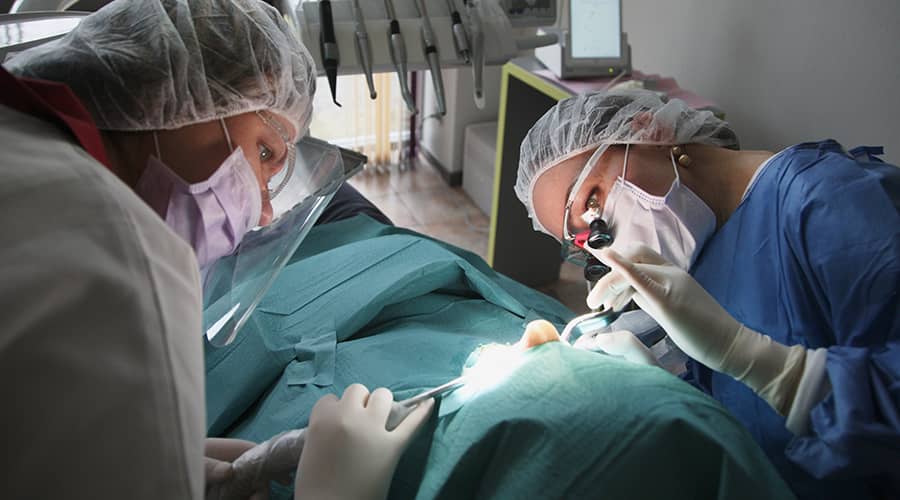
Dentures need a smooth, stable foundation to fit comfortably and function properly. When the shape of the jawbone or gum tissue makes it difficult to achieve a good fit, pre-prosthetic surgery may be recommended before the denture is made.
At Oral Facial and Implant Specialists in Deer Park, IL, Dr. J. Travis Thompson performs pre-prosthetic procedures to reshape bone or soft tissue and prepare the mouth for a dental prosthesis.
Schedule a consultation to learn whether surgery may be needed before your denture or other dental restoration is placed.
📞 (847) 381-0106
📍21660 W Field Pkwy #220, Deer Park, IL 60010
How Pre-Prosthetic Surgery Prepares the Mouth For Dentures
Pre-prosthetic surgery refers to procedures that prepare the bone and soft tissue of the mouth for a dental prosthesis. It is most commonly performed before dentures when irregular bone, excess tissue, or other anatomical features could interfere with the fit of the finished restoration.
After teeth are removed, the remaining jawbone does not always have a smooth, even contour. There may be sharp areas, prominent bone, or excess tissue beneath the gums. Correcting these areas can create a more suitable foundation for the denture.
When Is Pre-Prosthetic Surgery Needed?
Not everyone needs surgery before receiving dentures. Many patients have enough healthy, properly shaped bone and gum tissue for their restoration without additional surgical treatment.
Pre-prosthetic surgery may be recommended when an examination shows:
- Sharp or uneven areas of jawbone
- Prominent bony growths or projections
- Excess bone that interferes with denture placement
- Excess or irregular gum tissue
- A shallow area between the gums and cheeks that limits denture stability
- Teeth or remaining roots that need to be removed
Dr. Thompson will evaluate the mouth and coordinate with the dentist creating the prosthesis when needed to determine how the underlying bone and tissue should be prepared.
Improving the Fit of Existing Dentures
Pre-prosthetic surgery may help patients who already wear dentures but develop persistent sore spots or discomfort because of the shape of the underlying bone or gum tissue.
Over time, the jawbone can change after teeth are lost. Irregular or prominent areas of bone may create pressure beneath a denture and make it difficult to achieve a comfortable fit. In these cases, reshaping the bone or soft tissue may create a smoother foundation for the denture.
Denture discomfort does not always require surgery. A denture may simply need to be adjusted, relined, or replaced. Dr. Thompson can evaluate the underlying bone and soft tissue to determine whether pre-prosthetic surgery could improve the fit or whether the denture itself needs to be addressed.
Common Pre-Prosthetic Procedures
The procedure depends on the anatomy of the mouth and the type of prosthesis being planned. Some patients need only a small area reshaped, while others require more extensive preparation.
Common procedures include:
- Alveoloplasty: Reshapes and smooths the jawbone, often after tooth extraction, to create a more even ridge for a denture.
- Removal of exostoses: Removes prominent areas of bone that could interfere with the fit of a prosthesis.
- Tori removal: Removes bony growths that develop along the upper or lower jaw when their size or location interferes with a denture.
- Ridge reduction: Reduces or reshapes excess bone to improve the contour of the jaw.
- Soft tissue removal: Removes excess or irregular gum tissue that could affect the fit of the prosthesis.
- Vestibuloplasty: Adjusts the depth of the space between the gums and the lips or cheeks to create additional room for a denture flange.
- Tooth or root removal: Removes teeth or retained roots that would interfere with the planned restoration.
is planned around the specific areas that need to be corrected to support the final prosthesis.
Pre-Prosthetic Surgery and Dental Implants
Pre-prosthetic surgery can also be part of treatment with All-on-4 dental implants or implant-supported dentures. In some cases, the jawbone may need to be reshaped or reduced to create the space and contours needed for the planned full-arch restoration.
Dr. Thompson plans the surgical treatment around the final prosthesis, including the position of the implants and the amount and shape of bone needed to support the restoration.
Surgical Preparation for Your Dental Prosthesis
When pre-prosthetic surgery is needed, it is typically planned as part of the process of receiving dentures or another dental prosthesis. Dr. Thompson can coordinate with your restorative dentist to reshape areas of bone or soft tissue as needed before the final restoration is made.
Frequently Asked Questions
Alveoloplasty can be performed after extraction sites have healed if the remaining ridge has uneven, sharp, or prominent areas that interfere with a denture.
Bone spurs or sharp areas of bone can sometimes become noticeable as the jaw heals after tooth extraction. If an area remains prominent or creates an uneven surface where a denture will rest, it may need to be smoothed or removed as part of preparing the mouth for the prosthesis.
No. Tori generally only need to be removed when their size or location interferes with the fit or design of the denture. If they do not affect the planned prosthesis, removal may not be necessary.


