
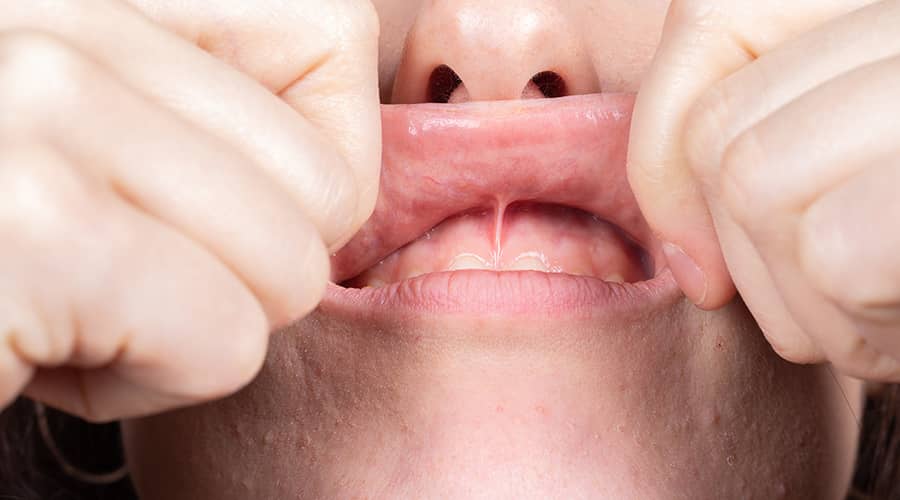
A frenectomy is a minor surgical procedure that releases or removes restrictive tissue connecting the tongue, lip, or cheek to surrounding structures. When this tissue is too tight or attached in a way that limits movement, it can interfere with feeding, speech, oral hygiene, or certain dental treatments.
At Oral Facial and Implant Specialists, Dr. J. Travis Thompson performs frenectomies for infants, children, and adults using CO2 laser technology.
📞 (847) 381-0106
📍21660 W Field Pkwy #220, Deer Park, IL 60010
When Is a Frenectomy Recommended?
We may recommend a frenectomy when a restrictive frenulum affects normal oral function or interferes with dental treatment. The reasons for recommending the procedure vary depending on the patient’s age and individual needs.
Infants
For infants, we may recommend a frenectomy when a tongue tie restricts the movements needed for breastfeeding or bottle feeding. Because feeding difficulties can have several causes, we evaluate tongue function before determining whether releasing the attachment would be beneficial.
Children and Teens
A frenectomy may be recommended when a restrictive attachment limits tongue movement, pulls on gum tissue, or contributes to a persistent gap between the upper front teeth. When treatment is related to orthodontic concerns, we coordinate with the child’s dentist or orthodontist to determine the appropriate timing.
Adults
For adults, a frenectomy may be recommended to improve tongue mobility, relieve tension on gum tissue, or prepare the mouth for dentures or full-mouth restorations. Releasing a restrictive attachment can help prevent interference with the fit, comfort, and stability of a planned prosthesis.
Types of Oral Frenula
A frenulum, also called a frenum, is a small fold of tissue that connects parts of the mouth. Everyone has these attachments, and most never cause problems. However, a frenulum that restricts movement or pulls on nearby gum tissue may require treatment.
Labial Frenulum (Lip Tie)
The labial frenulum connects the inside of the upper lip to the gum tissue above the front teeth. Also called the superior labial frenulum, this attachment varies in size, thickness, and position. When it restricts upper lip movement, it is commonly referred to as a lip tie.
Lingual Frenulum (Tongue Tie)
The lingual frenulum connects the underside of the tongue to the floor of the mouth. When this tissue is unusually short, tight, or restrictive, it can limit tongue movement. This condition is called ankyloglossia, commonly known as tongue tie.
Buccal Frenulum
The buccal frenula connect the inside of the cheeks to the gum tissue near the upper and lower teeth. These attachments are located along the sides of the mouth and can vary in size and position
The CO2 Laser Frenectomy Procedure
At Oral Facial and Implant Specialists, we perform frenectomies using CO2 laser technology. This approach allows for precise treatment while helping control bleeding and minimizing irritation to surrounding tissues.
The appointment begins with appropriate anesthesia or comfort measures based on the patient’s age and needs. Once the patient is ready, Dr. Thompson gently lifts the tongue or lip to access the restrictive frenulum and uses the laser to release the tight tissue. The actual laser treatment typically takes only a few minutes, although the appointment takes longer to allow time for preparation and aftercare. The laser also seals small blood vessels, so stitches are often unnecessary.
Recovery After a Frenectomy
Most patients experience initial healing within one to two weeks, although recovery varies depending on age and the extent of treatment. Mild tenderness, swelling, and a white or yellowish appearance over the treated area can be normal during healing.
We provide instructions for managing discomfort, eating, and keeping the area clean. Depending on the procedure and the patient’s needs, we may also recommend gentle tongue or lip exercises to support mobility during healing. Follow-up appointments allow us to check healing, assess movement, and address any concerns about scar tissue or reattachment.
Schedule a Frenectomy Consultation
At Oral Facial and Implant Specialists, Dr. Thompson provides frenectomy evaluations and treatment for patients of all ages. We assess each patient’s individual needs and explain whether releasing a restrictive attachment is likely to provide a meaningful benefit.
Call UsFrequently Asked Questions
Will a gap between the front teeth close after a frenectomy?
Not necessarily. In younger children, spacing may change as the permanent teeth erupt. In older patients, orthodontic treatment may be needed to close the gap, and a frenectomy may be recommended as part of that treatment plan.
Can a tongue tie affect speech?
Yes, a restrictive tongue tie may make it difficult to pronounce certain sounds, including T, D, L, R, and S. However, many children with tongue ties develop normal speech, and a frenectomy is not always necessary.
Is a frenectomy painful?
A frenectomy is generally well tolerated. We use appropriate anesthesia or comfort measures based on the patient’s age and treatment needs. The CO2 laser allows for precise treatment with minimal bleeding. Some tenderness or discomfort is normal afterward, but it is usually mild and improves within a few days.
How long does it take for latch to improve after a frenectomy?
Some babies show improvement in their latch during the first few feeds, while others need several days or weeks to adjust to their increased tongue mobility. Improvement is not always immediate, and some infants may continue to need feeding support from a lactation consultant.
What age is best for a frenectomy?
There is no single best age for a frenectomy. Treatment may be recommended during infancy, childhood, or adulthood, depending on the type of restriction and whether it is affecting oral function or dental treatment.


